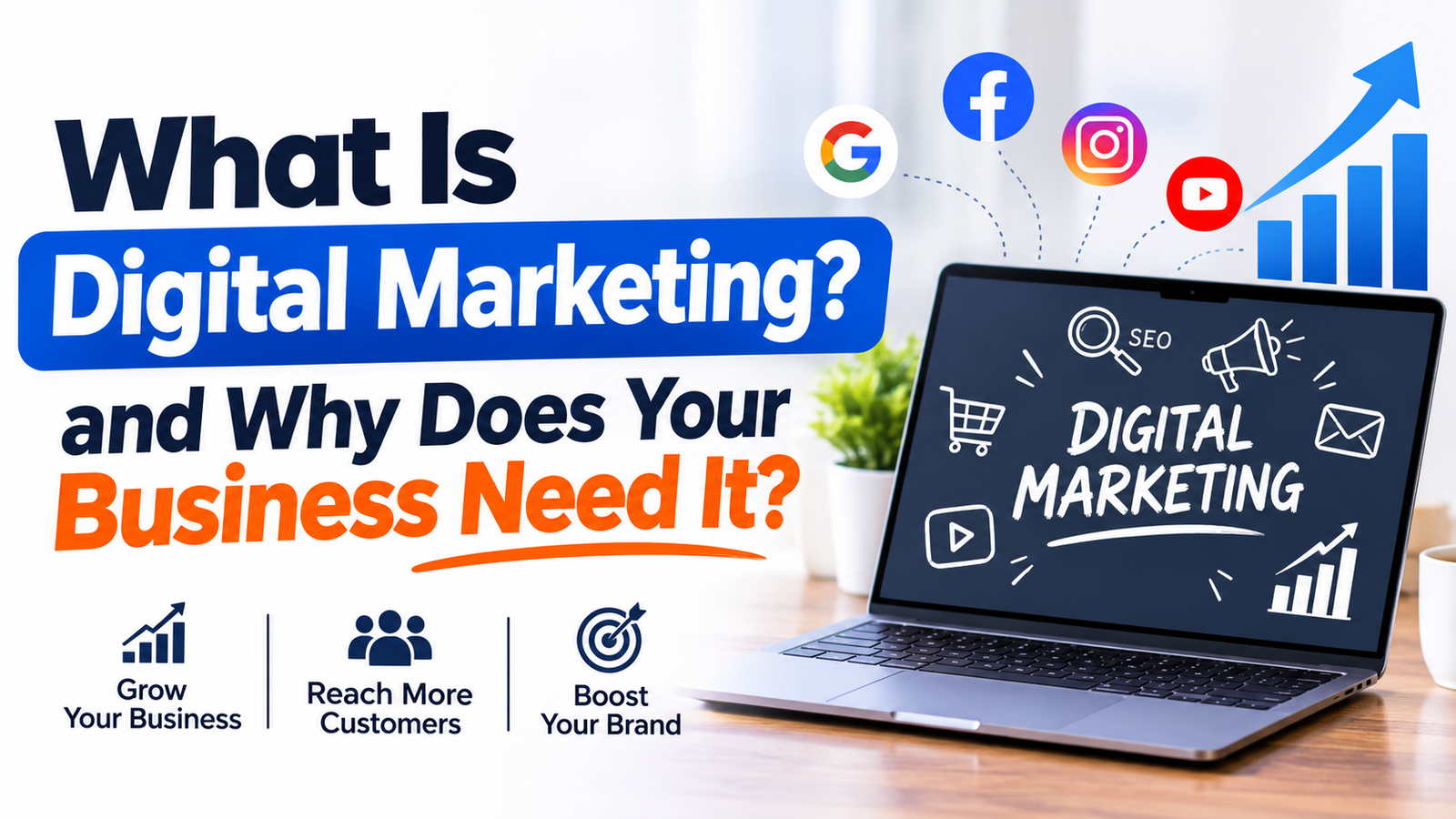
vIn today’s digital world, having a strong online presence is essential for every business. Customers increasingly use search engines, social media platforms, and websites to discover products and services before making purchasing decisions. This is where plays an important role.
It helps businesses reach the right audience, build brand awareness, generate leads, and increase sales through online channels. Whether you run a small business, a startup, or an established company,help you connect with potential customers and grow your business.
In this blog, we will explore what digital marketing is, its major types, and why your business needs a strong strategy.
What Is Digital Marketing?
It the process of promoting products, services, or brands through digital channels such as search engines, websites, social media, email, and online advertising platforms.
Unlike traditional marketing methods, allows businesses to reach specific audiences, measure campaign performance, and adjust strategies based on real-time results.
For example, when a customer searches for a service on Google and finds your website, discovers your business on Instagram, or clicks on an online advertisement, they are interacting with digital marketing.
The main goal to attract potential customers, engage with them, and turn them into loyal customers.
Types of Digital Marketing
It includes several strategies that help businesses improve their online visibility and achieve their marketing goals.
1. Search Engine Optimization (SEO)
Search Engine Optimization, commonly known as SEO, is the process of improving a website’s visibility in search engine results.
When people search for products or services related to your business, SEO helps your website become more discoverable through relevant search results.
SEO involves keyword research, quality content creation, technical website improvements, and building a user-friendly website.
Benefits of SEO:
- Improves organic search visibility.
- Helps attract relevant website visitors.
- Builds credibility and trust.
- Can generate long-term traffic without paying for every click.
2. Social Media Marketing
Social media marketing involves promoting your business through platforms such as Instagram, Facebook, LinkedIn, and other relevant social networks.
Businesses can use social media to share updates, showcase products, educate customers, and build relationships with their audience.
A consistent social media strategy helps your brand stay visible and encourages potential customers to engage with your business.
Benefits of social media marketing:
- Increases brand awareness.
- Builds relationships with customers.
- Encourages audience engagement.
- Supports lead generation and website traffic.
3. Pay-Per-Click Advertising (PPC)
Pay-per-click advertising allows businesses to display paid advertisements on search engines and other digital platforms. In many PPC campaigns, advertisers pay when someone clicks on their ad.
Google Ads is a popular example of a PPC advertising platform.
PPC can help businesses reach potential customers who are actively searching for particular products or services. Campaigns can be targeted according to factors such as location, search intent, and audience characteristics, depending on the platform.
Benefits of PPC advertising:
- Provides opportunities for immediate visibility.
- Reaches specific audiences.
- Supports measurable campaign performance.
- Helps generate leads and sales when campaigns are well optimized.
4. Content Marketing
Content marketing focuses on creating and sharing valuable information that attracts and engages a target audience.
Examples include blog posts, articles, videos, infographics, guides, and case studies.
Rather than directly promoting a product in every message, content marketing helps answer customer questions and build trust in your brand.
For example, a web development agency can publish blogs about website design, SEO, and website performance to educate potential clients.
Benefits of content marketing:
- Builds brand authority.
- Supports SEO efforts.
- Educates potential customers.
- Helps customers make informed decisions.
5. Email Marketing
Email marketing involves sending relevant messages, updates, offers, and newsletters to people who have chosen to receive communications from your business.
It is useful for nurturing leads, maintaining customer relationships, and encouraging repeat purchases.
Personalized emails and useful content can help businesses stay connected with their audience over time.
Benefits of email marketing:
- Maintains customer relationships.
- Supports lead nurturing.
- Promotes products and services.
- Encourages customer retention.
6. Website Design and Development
A business website often serves as the central destination for its activities.
It gives potential customers a place to learn about your company, explore your services, review your work, and contact your team.
A professional website should be mobile-friendly, easy to navigate, fast-loading, and designed with clear calls to action.
An effective website helps turn online visitors into inquiries and potential customers.
Why Does Your Business Need Digital Marketing?
Itis not just for large companies. Businesses of different sizes and industries can use it to improve visibility, connect with customers, and compete in their markets.
Here are some important reasons why your business should invest in digital marketing.
1. Reach Your Target Audience
It allows businesses to reach people who are more likely to be interested in their products or services.
Instead of marketing to everyone, businesses can use audience targeting, relevant keywords, and location-based strategies to connect with potential customers.
For example, a local service provider can focus on customers within its service area, while an online business can target audiences across multiple regions.
2. Increase Brand Awareness
Customers are more likely to recognize and remember businesses they encounter consistently across relevant online channels.
A combination of SEO, social media, useful content, and digital advertising can help your business build a recognizable online identity.
Over time, consistent and helpful communication can make your brand more familiar to potential customers.
3. Generate More Leads and Sales
One of the major advantages of digital marketing is its ability to guide potential customers toward taking action.
These actions may include filling out a contact form, calling your business, requesting a quotation, booking an appointment, or purchasing a product.
By combining relevant traffic with a well-designed website and clear calls to action, businesses can create more opportunities to generate leads and sales.
However, results depend on factors such as your industry, offer, budget, competition, and marketing strategy.
4. Market Your Business Within Your Budget
Digital marketing offers options for businesses with different marketing budgets.
For example, SEO and content marketing can help build organic visibility over time, while paid advertising can provide additional exposure when a business is ready to invest.
Businesses can begin with a focused strategy, monitor performance, and allocate resources to the channels that best support their goals.
It is not automatically inexpensive, but it can provide measurable ways to manage and evaluate marketing expenditure.
5. Measure Your Marketing Performance
Traditional marketing can sometimes make it difficult to determine exactly how customers discovered a business.
marketing tools provide data that helps businesses evaluate performance.
Depending on the channel and tracking setup, you can measure:
- Website traffic.
- Search engine impressions and clicks.
- Social media engagement.
- Advertising costs and conversions.
- Leads generated.
- Sales and return on advertising spend.
These insights help businesses understand what is working and where improvements may be needed.
6. Stay Competitive in Your Industry
Customers often compare several businesses before choosing a product or service provider.
A professional website, helpful content, positive customer reviews, and a consistent online presence can help your business compete more effectively.
It also allows businesses to identify customer needs, respond to market changes, and refine their messaging.
7. Build Trust and Credibility
Trust is an important factor in purchasing decisions.
Customers may feel more confident about a business when they find clear service information, helpful articles, authentic reviews, project examples, and easy ways to get in touch.
Publishing useful content and maintaining accurate business information can strengthen your online credibility.
How Can a Digital Marketing Agency Help Your Business?
Managing digital marketing requires time, planning, technical knowledge, and consistent effort. A professional marketing agency can help businesses develop and execute a strategy aligned with their objectives.
Depending on the agency’s services, support may include:
- SEO services: Improving search visibility and attracting relevant organic traffic.
- Social media management: Planning and publishing content across relevant platforms.
- Paid advertising: Creating and optimizing advertising campaigns.
- Content creation: Producing blogs, website copy, graphics, and other marketing materials.
- Website development: Building or improving a business website.
- Performance reporting: Reviewing key metrics and identifying opportunities for improvement.
Working with an agency can help business owners focus on their core operations while experienced professionals support their online marketing activities.
Before choosing an agency, review its services, communication process, reporting methods, relevant experience, and approach to measuring results.
How to Get Started with Digital Marketing
If your business is new to digital marketing, you do not need to use every available channel at once. Start with a clear plan.
Step 1: Define Your Business Goals
Decide what you want to achieve. Your goals might include increasing website traffic, generating more inquiries, improving brand awareness, or increasing online sales.
Step 2: Understand Your Target Audience
Identify your ideal customers, their needs, the problems they want to solve, and the online platforms they use.
Step 3: Build a Professional Website
Make sure your website clearly explains your services, provides useful information, works well on mobile devices, and makes it easy for visitors to contact you.
Step 4: Choose the Right Marketing Channels
Select channels based on your audience and objectives. For example, SEO may be useful for attracting people searching for your services, while social media may help showcase your work and engage with potential customers.
Step 5: Create Valuable Content
Publish content that answers customer questions, explains your services, and demonstrates your expertise.
Step 6: Track and Improve Your Results
Monitor relevant performance indicators regularly. Use the information to improve your website, content, targeting, and campaigns.
It works best as an ongoing process of testing, learning, and improvement rather than a one-time activity.
Conclusion
It has become an important part of business growth in the modern world. It helps businesses improve online visibility, reach relevant audiences, build credibility, generate leads, and measure marketing performance.
From SEO and social media marketing to content creation and paid advertising, each strategy can contribute to your business goals when used effectively.
The right approach depends on your industry, target audience, budget, and objectives. By building a clear strategy and consistently improving your online presence, your business can create more opportunities to connect with customers and grow over time.
Ready to Grow Your Business Online?
A strong digital presence starts with the right strategy. Whether you want to improve your website, increase search visibility, or reach more potential customers, professional digital marketing support can help you take the next step.
Contact our team today to discuss your business goals and explore the right solutions for your brand.